#5704
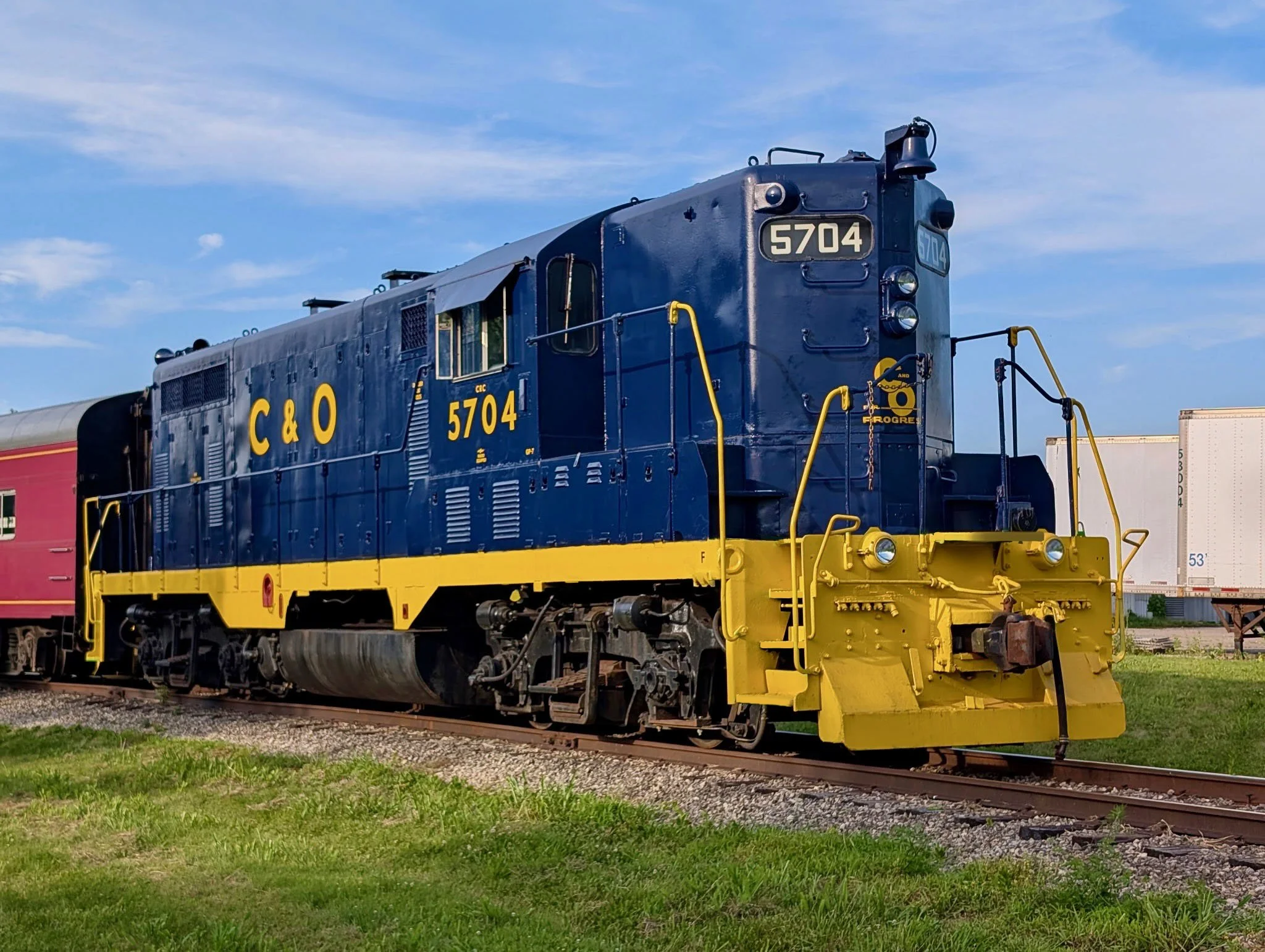
Locomotive 5704 is the pride of our fleet and the one that “started it all” for us 40 years ago. Ordered by the Pere Marquette Railroad from General Motors’ Electro Motive Division in 1947, it was delivered to the Chesapeake and Ohio Railway as a result of a merger.
The 1500 horsepower locomotive was built in May of 1950 and was ballasted to 266,000 lbs., the heaviest GP7’s on the C&O.; GP stands for General Purpose, and the 5704 was built as a dual service locomotive. It was capable of moving both passenger and freight cars, and was originally equipped with a steam generator to provide heat for passenger cars in cold weather. The 5704 was purchased by the Indiana & Ohio around 1986.
Despite some minor upgrades, 5704 is believed to be the longest operating GP7 in the Country, with well over 3 million miles accumulated.
#901
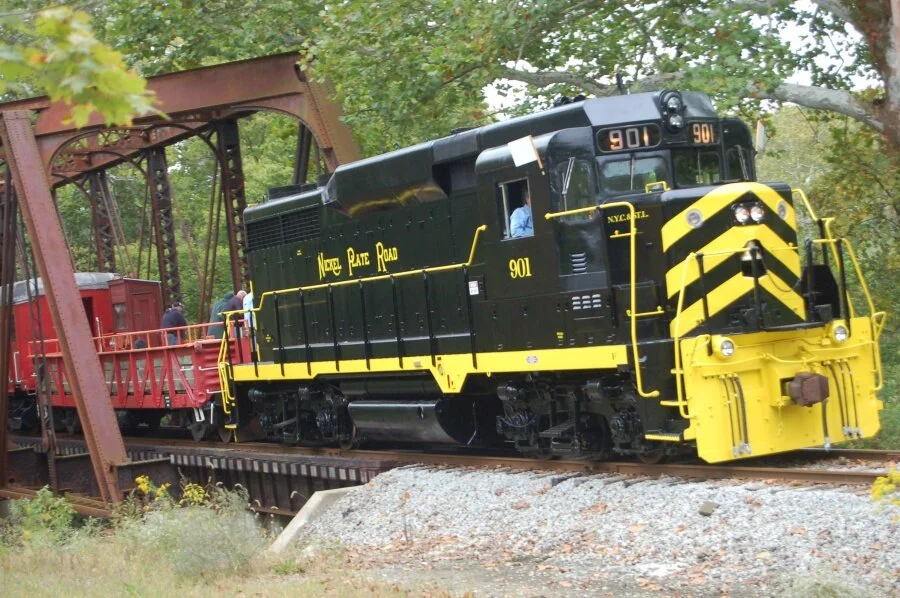
Locomotive 901 is an EMD GP30 delivered to the Nickel Plate Road in November 1962. It was one of ten GP-30s purchased by the Nickel Plate, numbered 900 to 909. The total cost for the ten units was 2.07 million dollars. They were the first freight units on the NKP with low short hoods to provide better visibility. Shortly thereafter the Nickel Plate merged with the Norfolk and Western in 1964, and 901 became N&W; #2901 . It served the N&W; and later Norfolk Southern until purchased by the Indiana & Ohio in 1986.
In 2011, thanks to contributions from the Nickel Plate Historical & Technical Society, CNRY #85 was restored to as-delivered Nickel Plate colors. It was then dedicated to former employee Robert A. Zoellner.
Currently, 901’s sister-unit Nickel Plate 902 is pulling the Cincinnati Dinner Train.
#7544
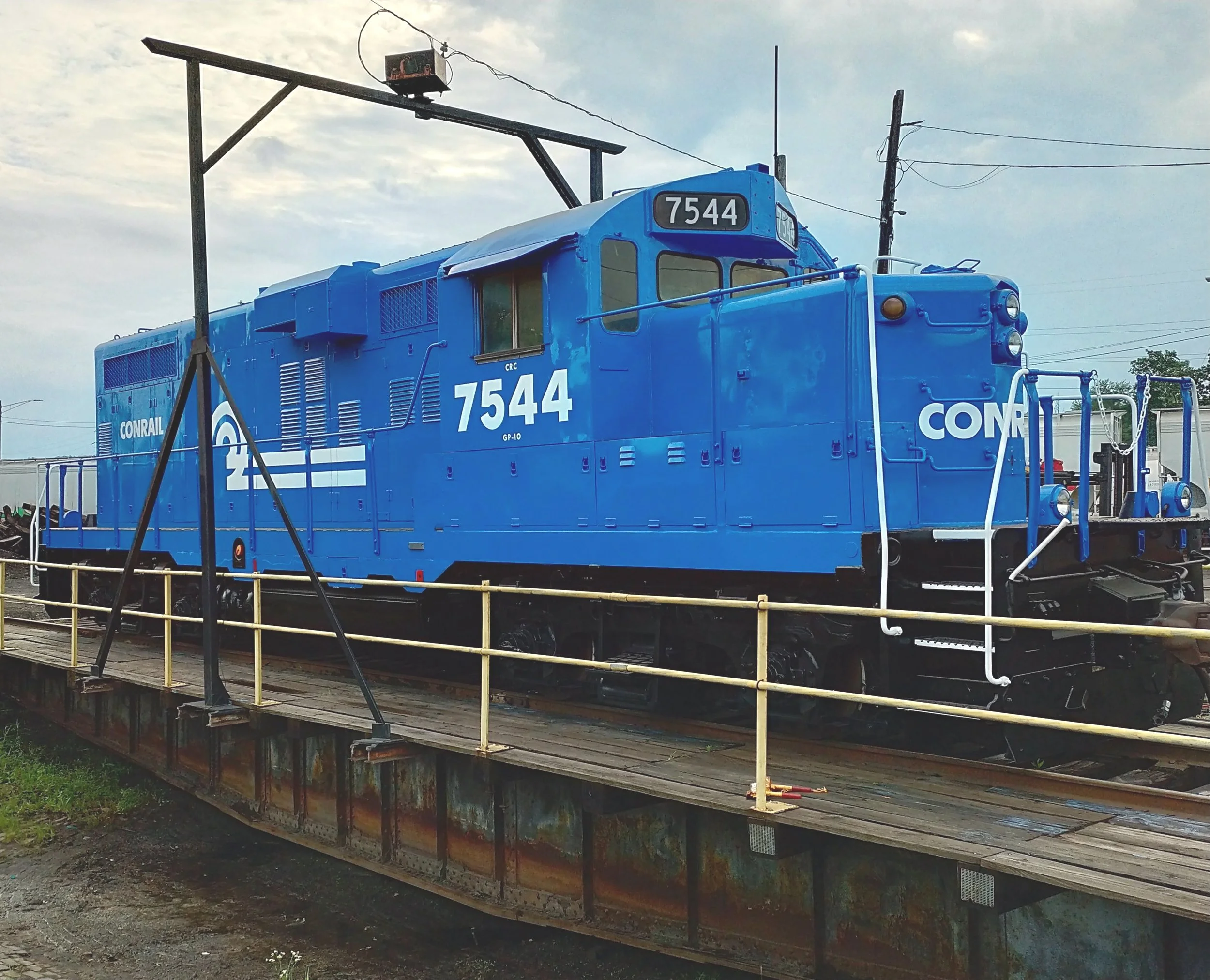
Locomotive 7544 was originally a GP9 built as Illinois Central 9037 in 1954. It was out shopped as a GP10 in 1974 and renumbered ICG 8008. It had a second career as Paducah & Louisville 8349 before going to the Tennessee Central Railway museum. Cincinnati Scenic Railway acquired it in 2019, performing a thorough rebuild and cosmetic restoration.
It was assigned road number 7544, one of the numbers in the 7500 series never actually used on a Conrail unit, because it was originally an Illinois Central engine.

#6955
Locomotive 6955 is a 2,250 hp EMD GP30, four-axle road switcher diesel-electric locomotive built by General Motors Electro-Motive Division of La Grange, Illinois in 1962. Between July 1961 and November 1963 a total of 948 units were built for railroads in the United States and Canada. It was the first so-called "second generation" EMD diesel locomotive, and was produced in response to increased competition by a new entrant, General Electric's U25B, which was released roughly at the same time as the GP30.
Since EMD wanted the new locomotive to be visibly modern and updated, they turned to the GM Automotive Styling Center at Troy, Michigan for help. The automobile stylists created the GP30's trademark "hump" and cab roof profile. The hump-like bulge started at the front of the cab and enveloped the air intakes for the central air system and the dynamic brake blister. Units ordered without dynamic brakes were the same shape, but lacked the intakes to cool the dynamic brake resistor grids.
The 6955 was one of 77 GP30’s ordered by the Baltimore & Ohio Railway. It was later changed to #4260 after the B&O and Chesapeake & Oho merger, which created the famous “Chessie” brand.
The Chessie System rebuilt its GP30 units into GP30Ms, adding newer components, new traction motors and reducing their power to 2000 hp. They lasted with CSX into the mid-to-late 1990s.
There are approximately 30 preserved units still operating in Museum and Shortline service. All other remaining GP30’s have been heavily rebuilt to modern standards.
Special Thanks must be given to National Railway Equipment for helping us preserve this rare locomotive.
You can find out more about the restoration process of this locomotive by visiting: https://www.facebook.com/savethechessie
#532
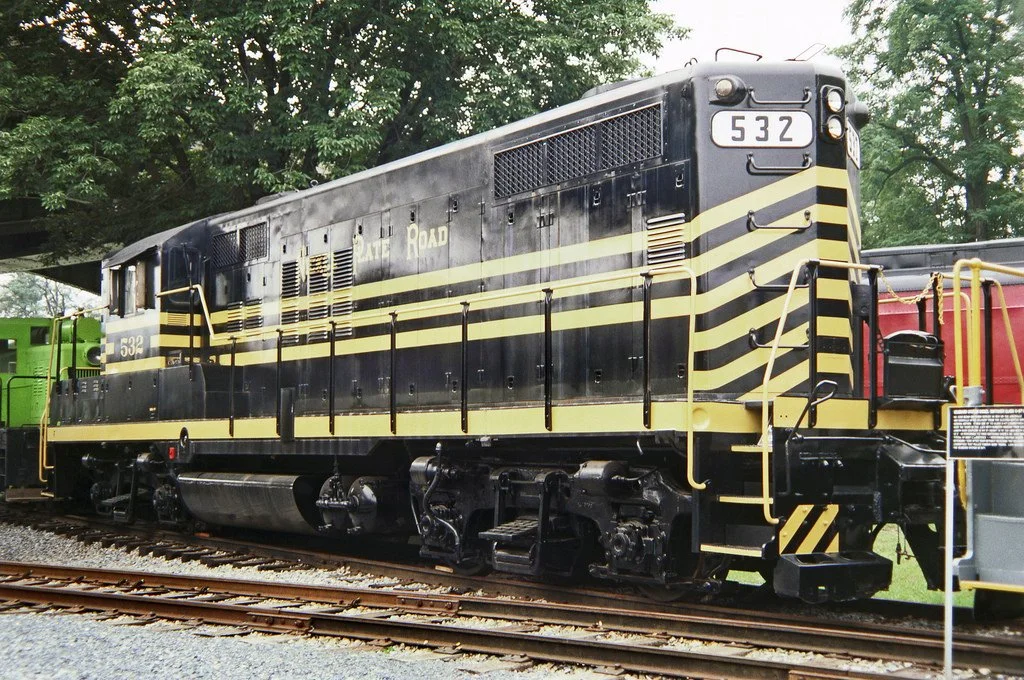
Nickel Plate Road GP9 #532, builder # #25075. was built at the EMD plant in LaGrange Illinois in late 1958, being placed into service by the NKP on January 17, 1959 at Frankfort Indiana; It was assigned engine class # ERS17f and was considered a Phase IV GP9 with the two larger 48” radiator fans replacing the four 36” fans. These locomotives were numbered 510 to 534 and 810 to 814 by the NKP. This series of GP9s were the last purchased by the NKP. 532 became N&W 2532 in August of 1966. It became NS 1462 in 1983 and was retired by the NS on April 9, 1984. After retirement 532 was donated to the Virginia Museum of Transportation in December 1984 and later acquired by the Roanoke Chapter of the NRHS.
The 532 was purchased by Cincinnati Scenic Railway in 2025. You can learn more about this project by visiting: nkpohio.org
#1776
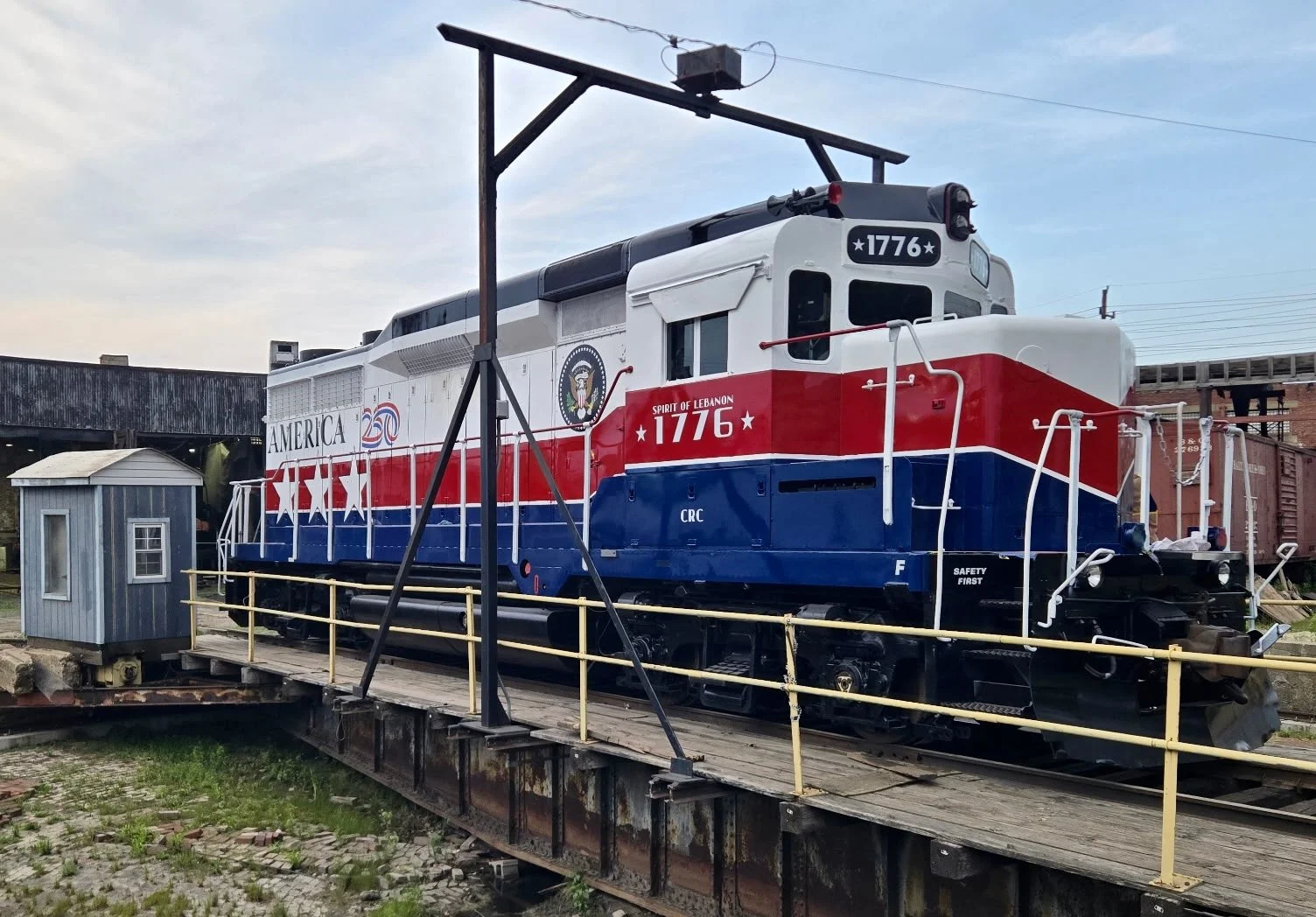
Locomotive 1776 (originally B&O 6923) is a 2,250 hp EMD GP30, four-axle road switcher diesel-electric locomotive built by General Motors Electro-Motive Division of La Grange, Illinois in 1962. Between July 1961 and November 1963 a total of 948 units were built for railroads in the United States and Canada. It was the first so-called "second generation" EMD diesel locomotive, and was produced in response to increased competition by a new entrant, General Electric's U25B, which was released roughly at the same time as the GP30.
Since EMD wanted the new locomotive to be visibly modern and updated, they turned to the GM Automotive Styling Center at Troy, Michigan for help. The automobile stylists created the GP30's trademark "hump" and cab roof profile. The hump-like bulge started at the front of the cab and enveloped the air intakes for the central air system and the dynamic brake blister. Units ordered without dynamic brakes were the same shape, but lacked the intakes to cool the dynamic brake resistor grids.
The 5 was one of 77 GP30’s ordered by the Baltimore & Ohio Railway. It was later changed to #4241 after the B&O and Chesapeake & Oho merger, which created the famous “Chessie” brand.
The Chessie System rebuilt its GP30 units into GP30Ms, adding newer components, new traction motors and reducing their power to 2000 hp. They lasted with CSX into the mid-to-late 1990s.
The 5 was acquired from the Raritan Central Railway in 2025 and will be cosmetically restored into a 250th Anniversary commemorative paint scheme. Our goal is to eventually restore it back to it’s as delivered B&O “Sunburst” scheme within the next 5-7 years.