Passenger Cars
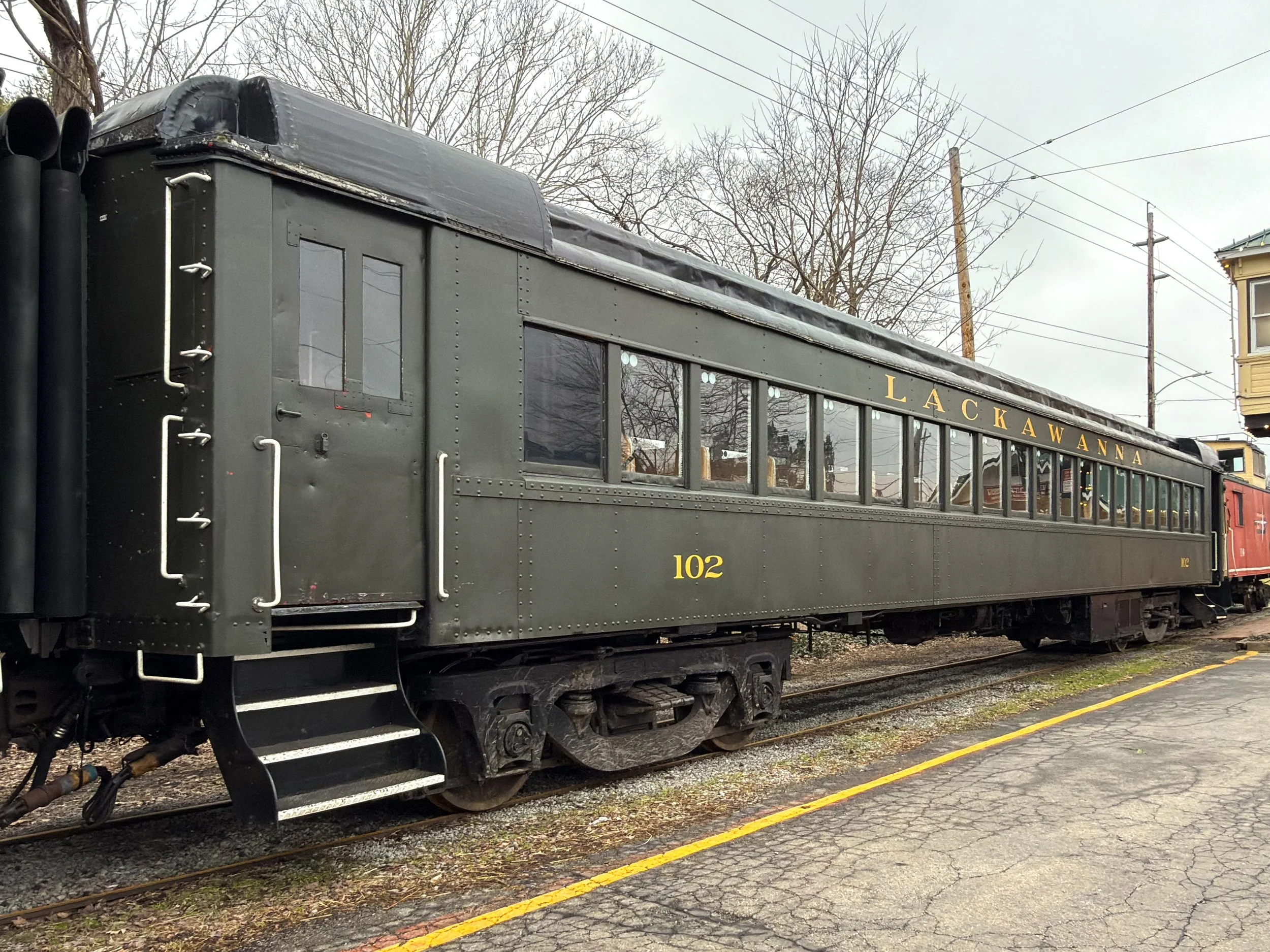
#101, #102, #103, #104
These cars are the pride of our fleet and have been in use on our trains for 40 years.
Ordered by the Lackwanna Railroad in the early 1930’s, they were part of an order of 141 Electrified MU cars built for commuter service.
These cars were inaugurated with fanfare on September 3, 1930, when the aging inventor Thomas A. Edison, a key proponent of DC current (the source of electric power for the MUs), drove the first train for the first mile along its 13-mile trip from Hoboken to Montclair, New Jersey.
During their 54-year tenure, the cars were run by four different railroad companies: the Lackawanna Railroad (1930–1960); the Erie Lackawanna Railroad (1960–1976); Conrail (1976–1982); and finally, NJ Transit (1983–1984). The cars were retired after their final runs on August 24, 1984.
In recent years, many upgrades have been performed on these cars, including restoration back into their as built Pullman Green paint.
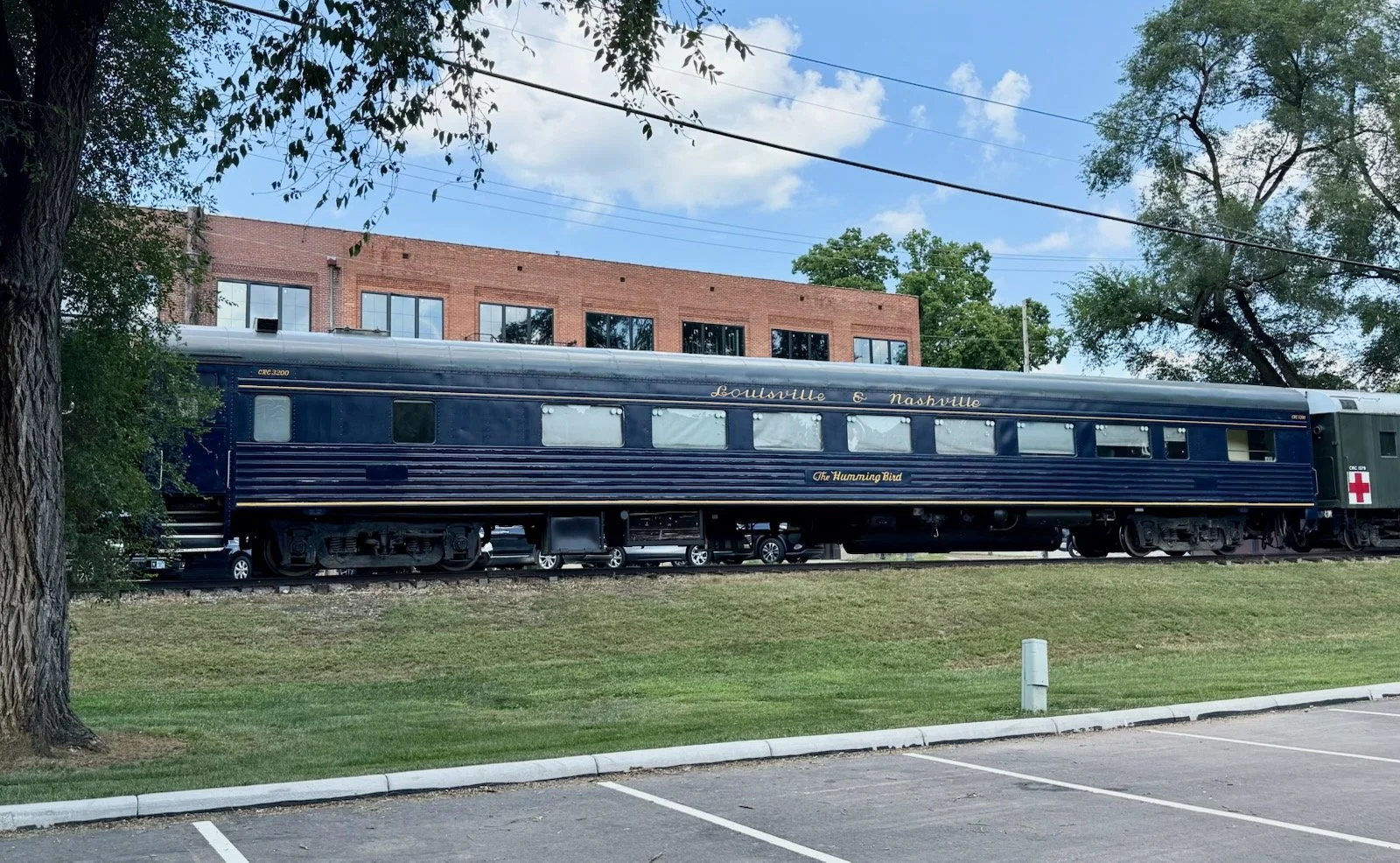
#3200 - “Hummingbird”
Built in 1946 for the Louisville & Nashville Railroad for use on it’s popular Hummingbird passenger train which ran from Cincinnati to New Orleans, Louisiana, via Louisville, Nashville, Birmingham, Montgomery, AL.
Upon retirement the 3200 later operated on the Pittsburgh Commuter train before being sold to the Fort Wayne Railroad Historical Society in the mid-1980’s. This was the beginning of an exciting second career for this car traveling the country and operating behind several mainline steam locomotives in excursion service.
The 3200 was later sold to the Milwaukee Road 261 organization, Lake Central Rail Tours and finally the Cincinnati Dinner Train before being acquired by Cincinnati Scenic Railway.
In 2025 it was restored back to it’s as built paint scheme from 1946.
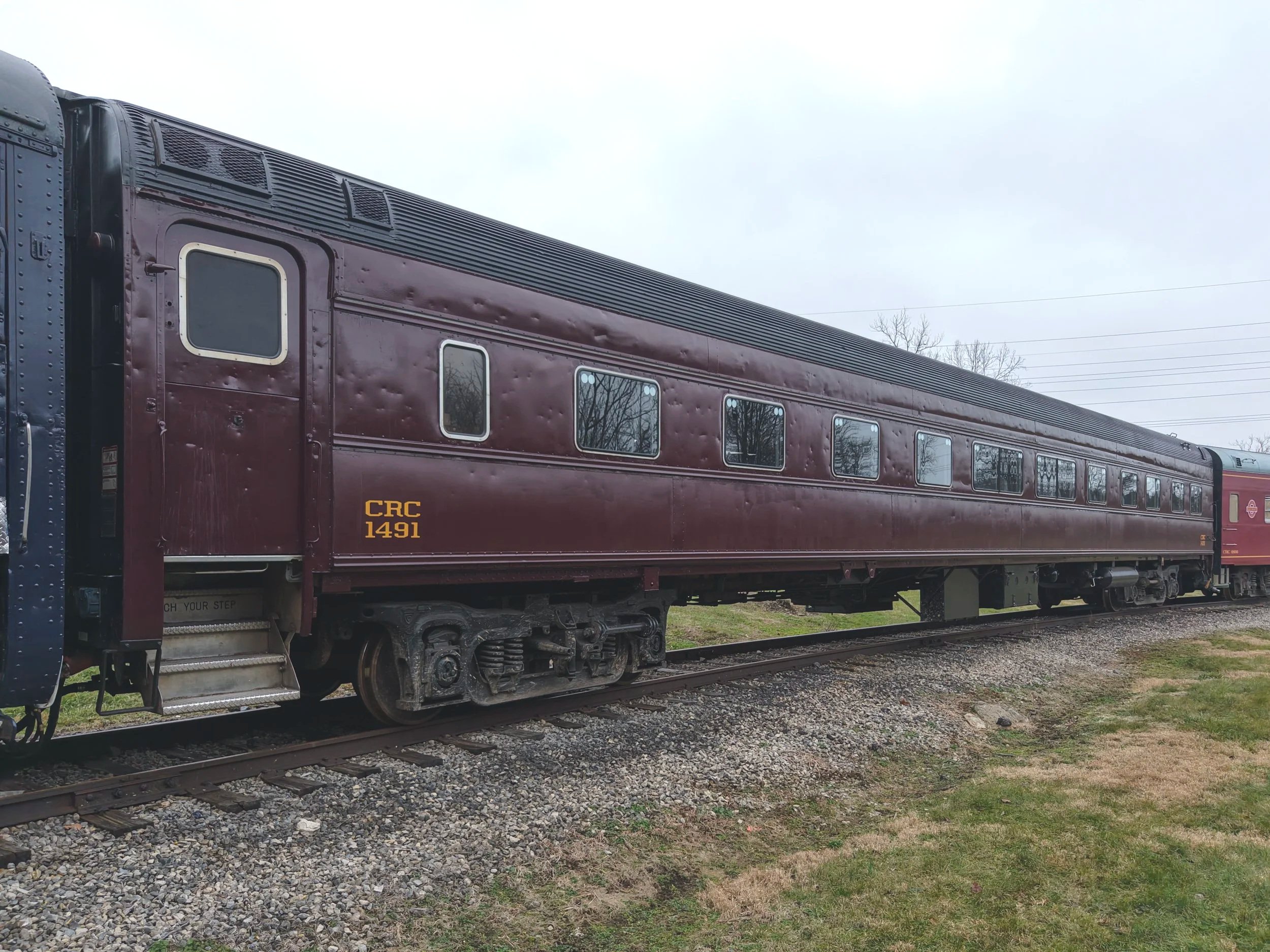
#1491 - “Mingo County”
#1491 was built in 1950 for the Norfolk & Western Railway as a 10-6 sleeping car. It operated on many popular N&W trains between Cincinnati, Roanoke, and Norfolk. It was later acquired from the Maryland Area Rail Commuter agency and converted into a high capacity coach. It retains this current configuration to this day. Cincinnati Scenic Railway acquired the car in 2019 from the Western Maryland Scenic Railroad. Our goal is to return it back to it’s as delivered N&W paint scheme someday soon.
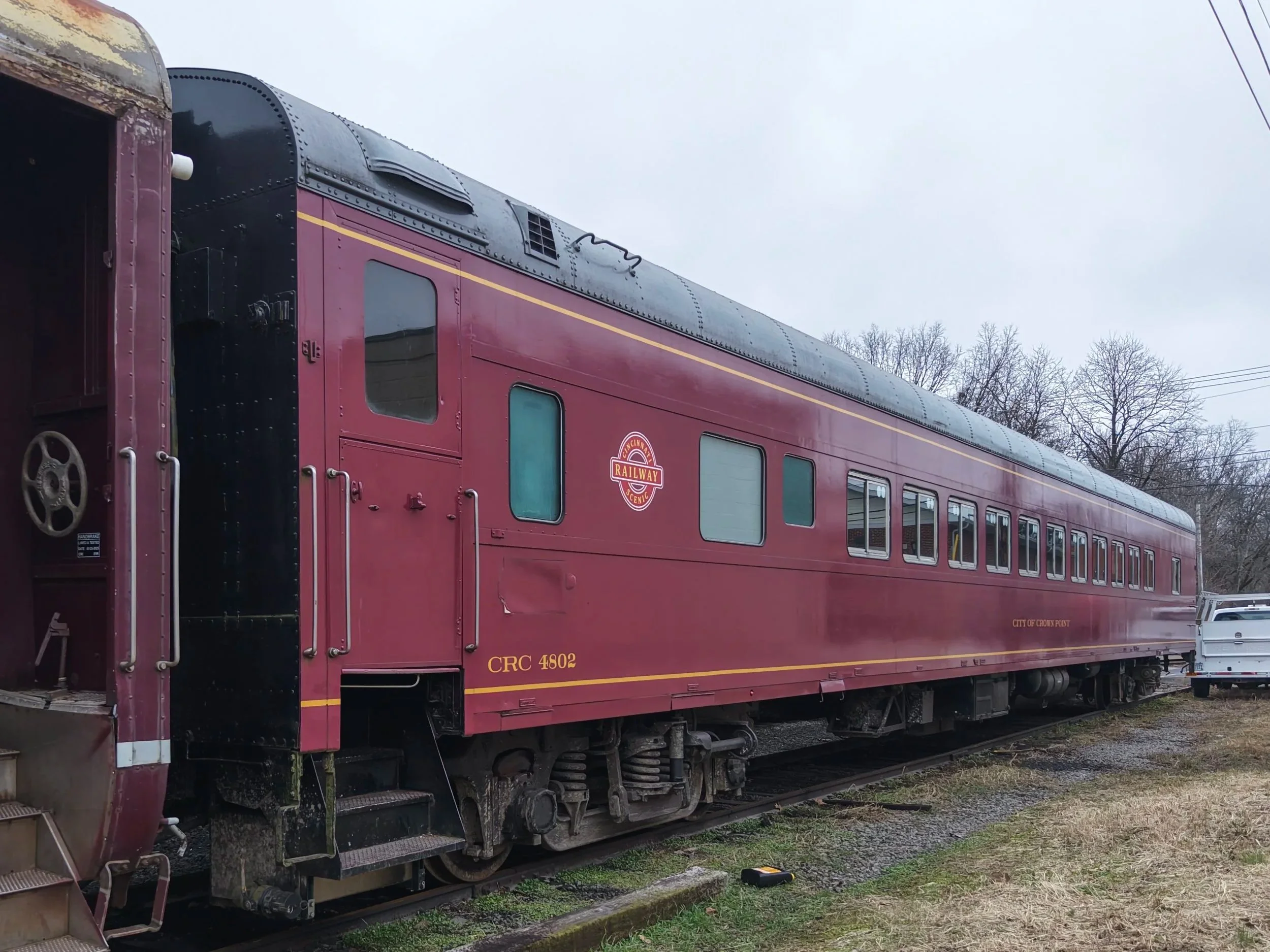
#4802 - “City of Crown Point”
Built in 1950 for the Union Pacific Railroad as a chair car offering additional leg room for passengers. It was used on the famous “Challenger” passenger train that operated between Chicago and Los Angeles. In 1970 it was sold to the Grand Trunk Western (later SEMTA) for commuter service between Detroit and Pontiac, MI. Golden Age Rail Equipment later bought the 4802 and sister car 4806 from SEMTA and restored them for use on excursion trains throughout the Midwest. Both cars later spent time in Michigan and Indiana with Lake Central Rail Tours before being sold to the Tennessee Central Railway Museum in Nashville, TN. Cincinnati Scenic Railway purchased both cars from TCRY in 2018 and has performed extensive upgrades to the electrical system, interiors, and restrooms.
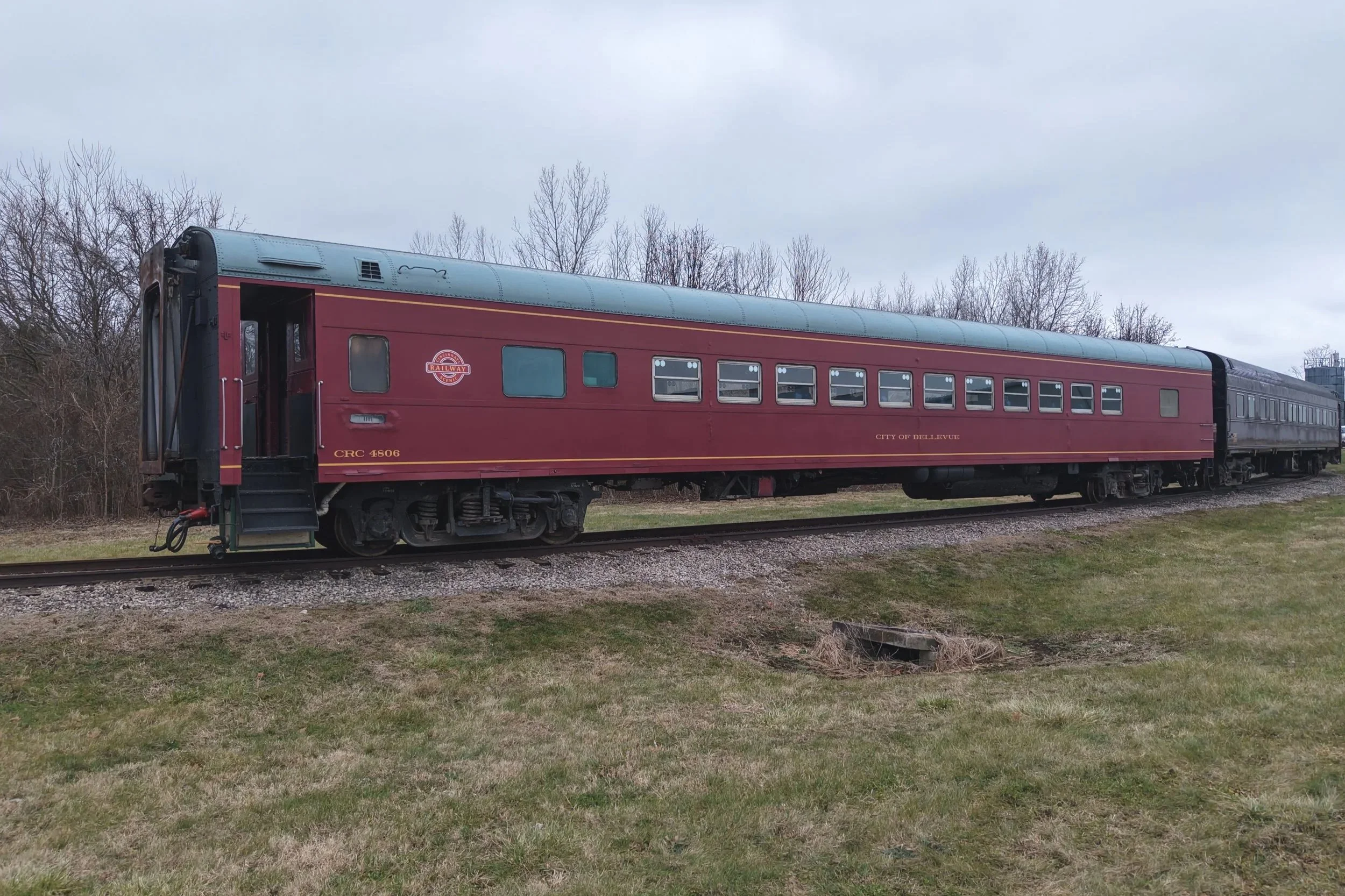
#4806 - “City of Bellevue
Built in 1950 for the Union Pacific Railroad as a chair car offering additional leg room for passengers. It was used on the famous “Challenger” passenger train that operated between Chicago and Los Angeles. In 1970 it was sold to the Grand Trunk Western (later SEMTA) for commuter service between Detroit and Pontiac, MI. Golden Age Rail Equipment later bought the 4806 and sister car 4802 from SEMTA and restored them for use on excursion trains throughout the Midwest. Both cars later spent time in Michigan and Indiana with Lake Central Rail Tours before being sold to the Tennessee Central Railway Museum in Nashville, TN. Cincinnati Scenic Railway purchased both cars from TCRY in 2018 and has performed extensive upgrades to the electrical system, interiors, and restrooms.
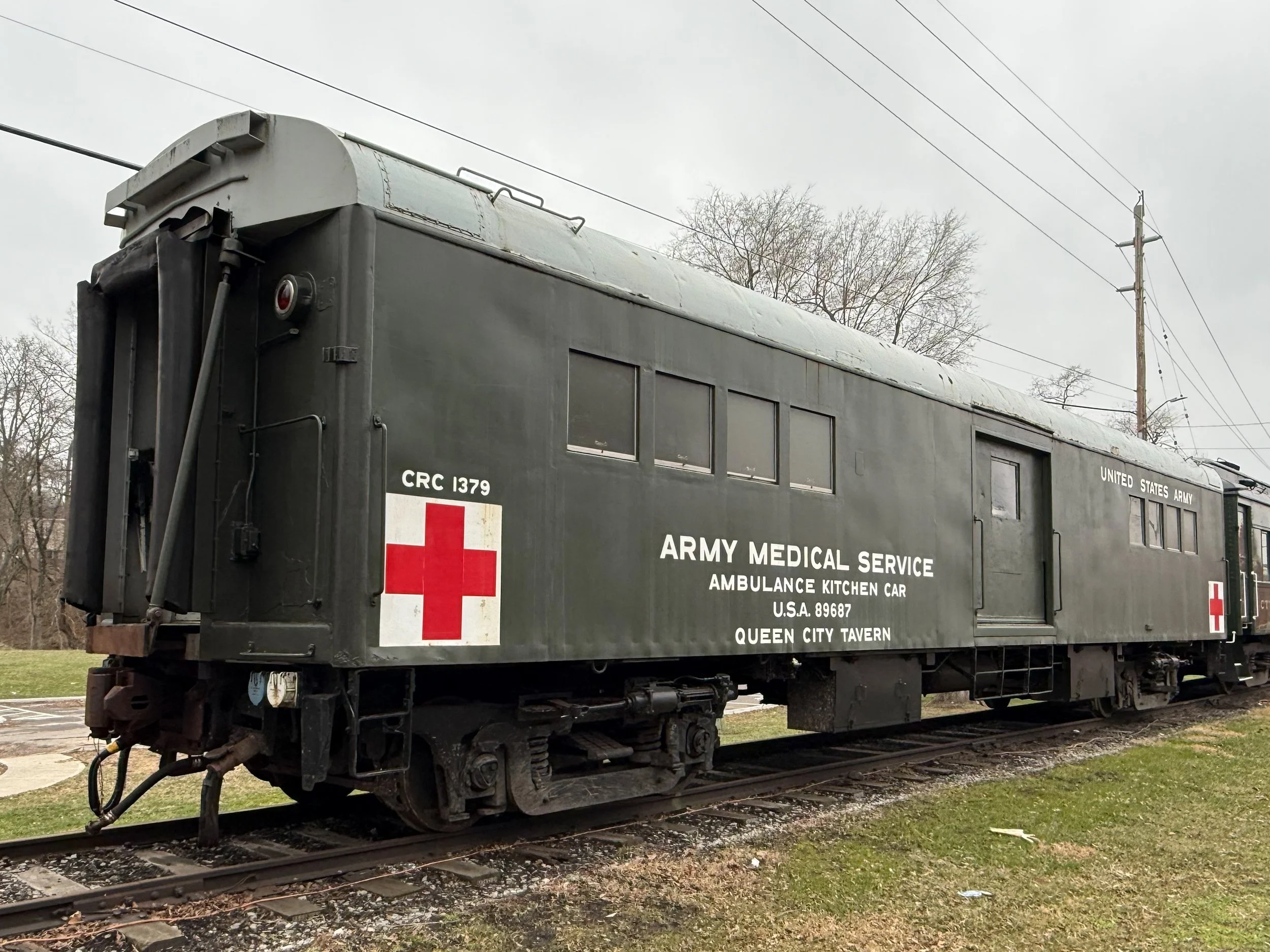
#1379 - “Queen City Tavern”
These 50-foot cars were built by St. Louis Car Company for the Army as kitchen cars, later sold to Amtrak for use as baggage cars. Cincinnati Railway Company purchased the 1379 from Amtrak and later sold it to the Cincinnati Dinner Train where it was rebuilt into an open air bar car and named the Queen City Tavern. Cincinnati Scenic Railway later purchased the car and uses it for concessions and evening events.
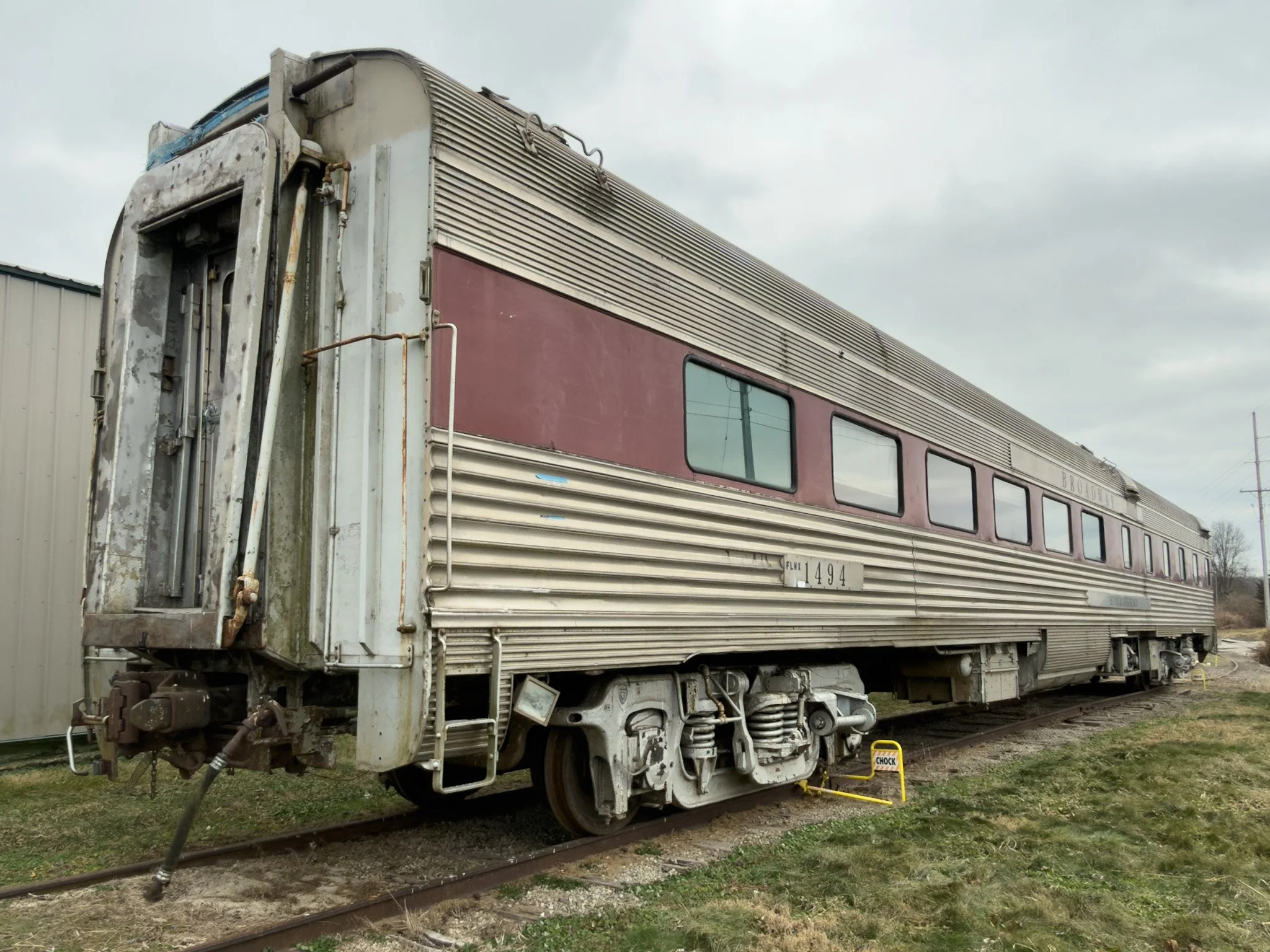
#1494 - Dining Car
Thirty-six seat diner 1494 was built as Santa Fe 1494, one of eight cars (1491-1498) completed under Budd Lot. No. 96915 in June and July 1942. These were some of the last passenger cars built after the War Production Board ended the construction of new passenger cars during WWII.
These lightweight, stainless steel, fluted-side cars were designed for premier, high-speed service in on such famous trains as the Super Chief and El Capitan between Chicago and Los Angeles.
This was one of very few pre-WWII cars initially purchased by Amtrak, and was acquired because the Santa Fe wanted to sell all of its lightweight cars as a package deal. After being sold to Amtrak, it was numbered 8039 and converted to 48 seats.
The 1494 was later sold to the Broadway Dinner Train in Nashville, TN, which was was of the first successful dinner train operations in the United States. In 2000 the car was purchased by Lake Central Rail Tours in Michigan for use on various dinner trains and excursions.
Cincinnati Scenic Railway purchased the car in 2020 and is awaiting interior and mechanical upgrades before entering service again.
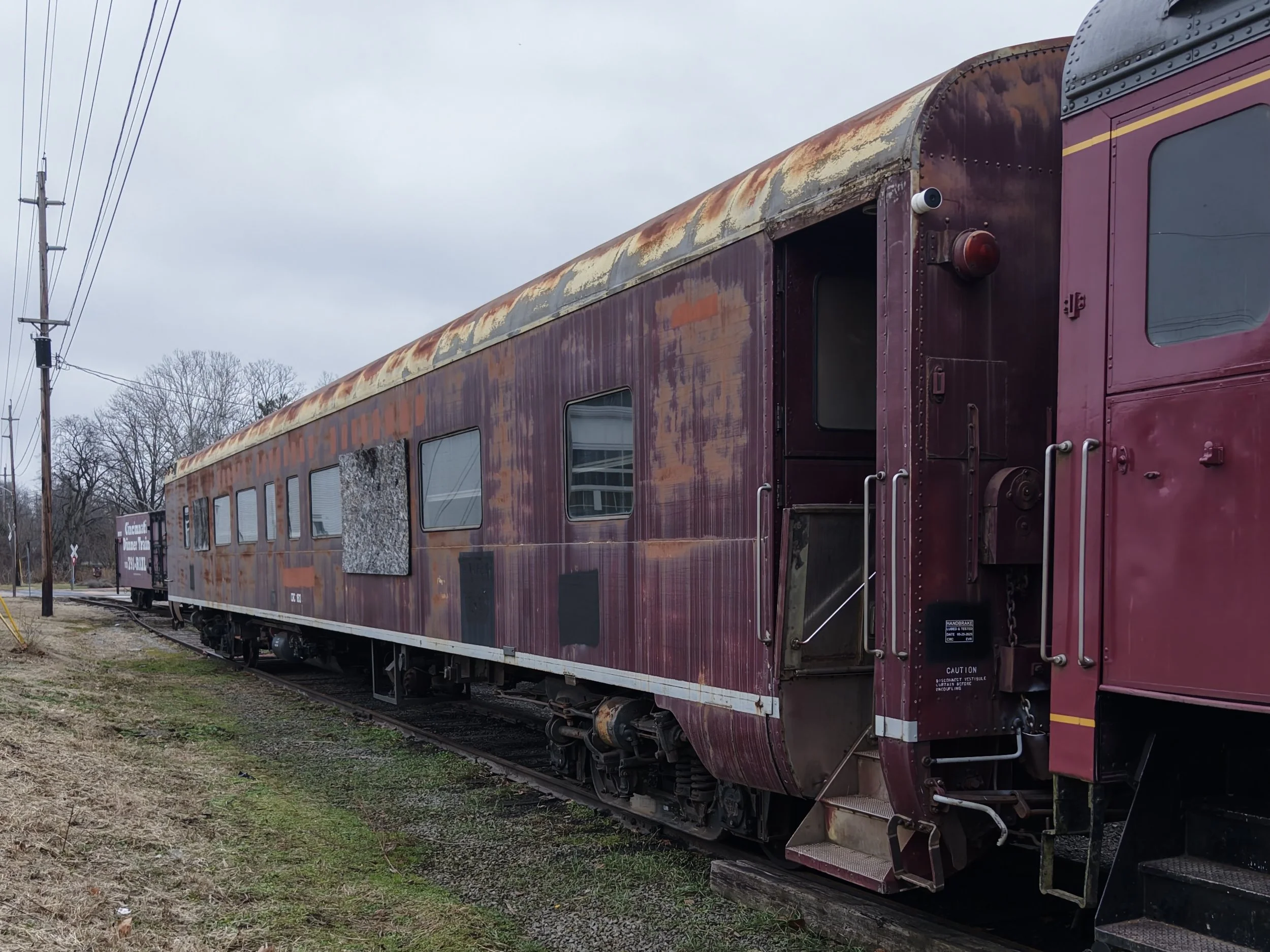
#1613 - Coach
The C&O 1600-series passenger cars were built in 1950 as a 52 seat coach. These lightweight, streamlined coaches built by Budd and Pullman-Standard for the Chesapeake & Ohio Railway, were primarily intended for the ill-fated Chessie streamliner. These cars featured modern styling, often included central partitions for segregated seating, and were subsequently used on other C&O trains like The George Washington that operated between Cincinnati and Washington D.C.
Some 1600-series coaches were later rebuilt for commuter service, which the 1613 was one of. It operated on the short lived PATrain from 1975–1989. The Port Authority operated a commuter train between Pittsburgh and Versailles (Mon Valley) to serve industrial workers, but it closed in 1989 due to low ridership, high costs, and industrial decline.
1613 was then purchased by the Fort Wayne Railroad Historical society and renamed the “Lawton Park”. It was later owned by the Tennessee Valley Railway Museum and Norfolk Southern, before being sold to a private owner.
Cincinnati Scenic Railway purchased the car in 2025 and is in the process of restoring it back to service. 1613 is truly unique in the fact that is still retains most of it’s original “as built” interior decor, which will be preserved.
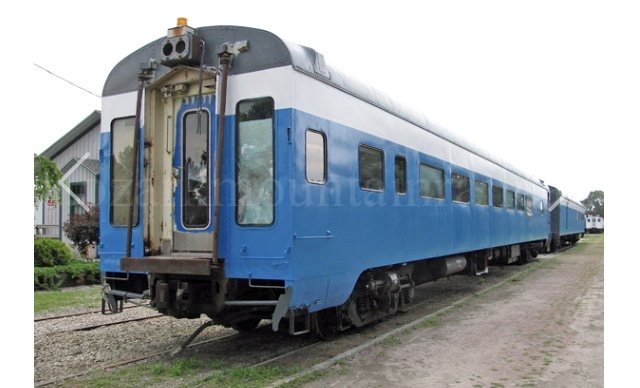
#2628 - Coach
The 2628 was built in 1947 as a 56 seat coach. Pullman-Standard delivered these new lightweight coach cars in to support such famous trains as the City of New Orleans. The Illinois Central Railroad introduced the original City of New Orleans on April 27, 1947. It was a daytime, all-coach companion to the overnight Panama Limited, which had been all-Pullman for most of its run. The 921-mile route, which the City of New Orleans covered in 15 hours 55 minutes, was the longest daytime schedule in the United States. The average speed of the new train was nearly 60 mph with a maximum of 100 mph ; a result of the largely flat route of the Illinois Central along the Mississippi River.
Through the 1950s, the IC operated with de facto segregation, with coaches in the City of New Orleans often divided by race (forward cars for black passengers, rear cars for white passengers). On May 1, 1971, the IC intercity service was taken over by Amtrak, marking the end of IC's operation of these passenger cars.
In the early 1970’s, 2628 operated on the short lived Oregon, Pacific, & Eastern Railroad. During this time, it operated behind famous steam locomotive #19 which starred in such films as 20th Century Fox's 1973 motion picture Emperor of the North Pole, starring Ernest Borgnine and In 1985, Stand By Me, Rob Reiner's motion picture of a Stephen King novel.
After being owned by several more private owners, Cincinnati Scenic Railway purchased the car in 2025 and will restore it back to service.
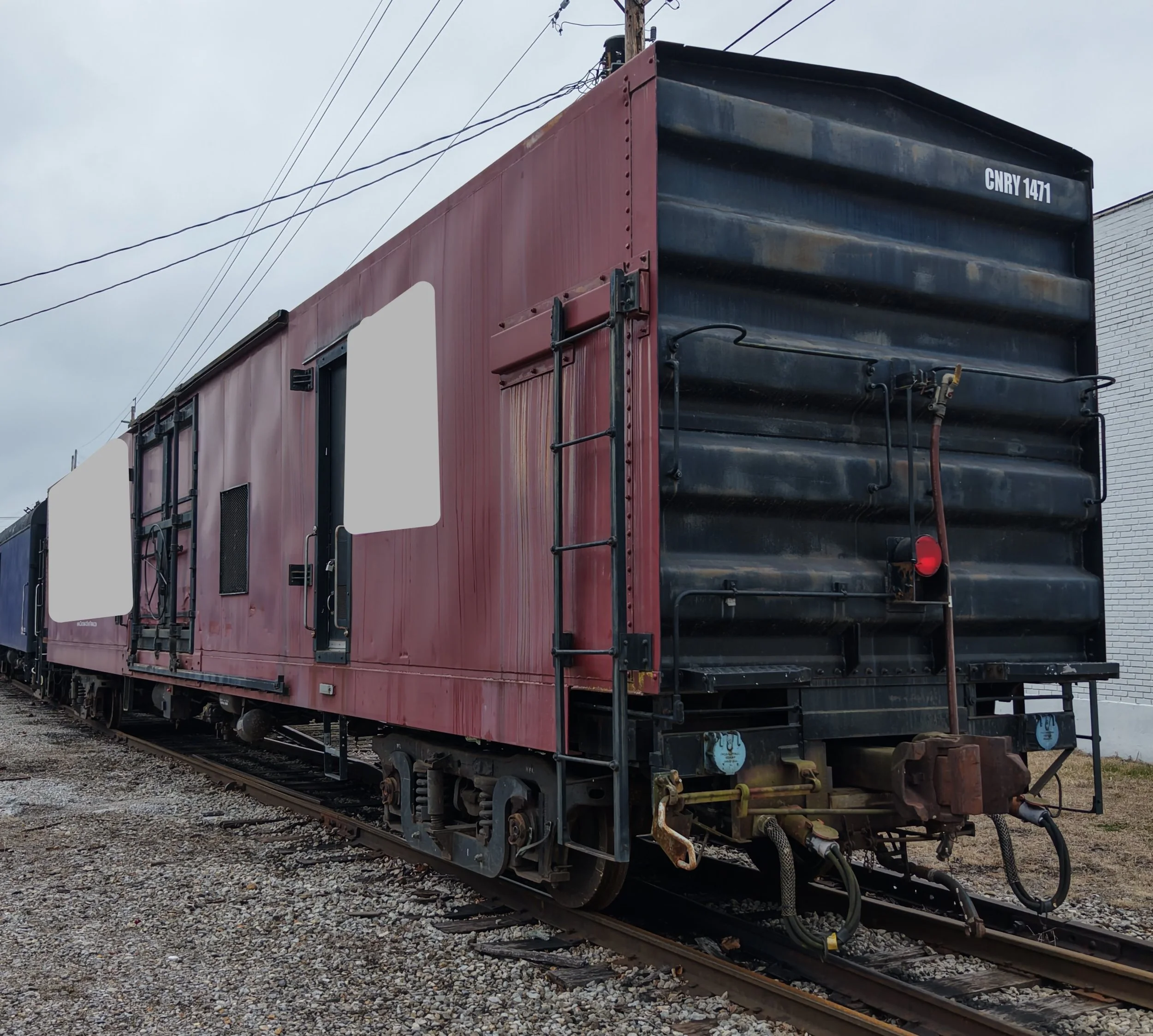
#1471 - Power Car
Built in 1986 for Amtrak as Material Handling Cars (MHC), these were specialized, 60-foot freight-style cars built to transport mail and express parcels on high-speed passenger trains. Designed to operate at speeds up to 110 mph, they featured passenger-style trucks, HEP pass-through cabling, and usually operated on the head end Cincinnati Scenic Railway purchased the 1471 in 2022 from the Cincinnati Dinner Train and will continue to use it as a power car, providing electricity through our train.
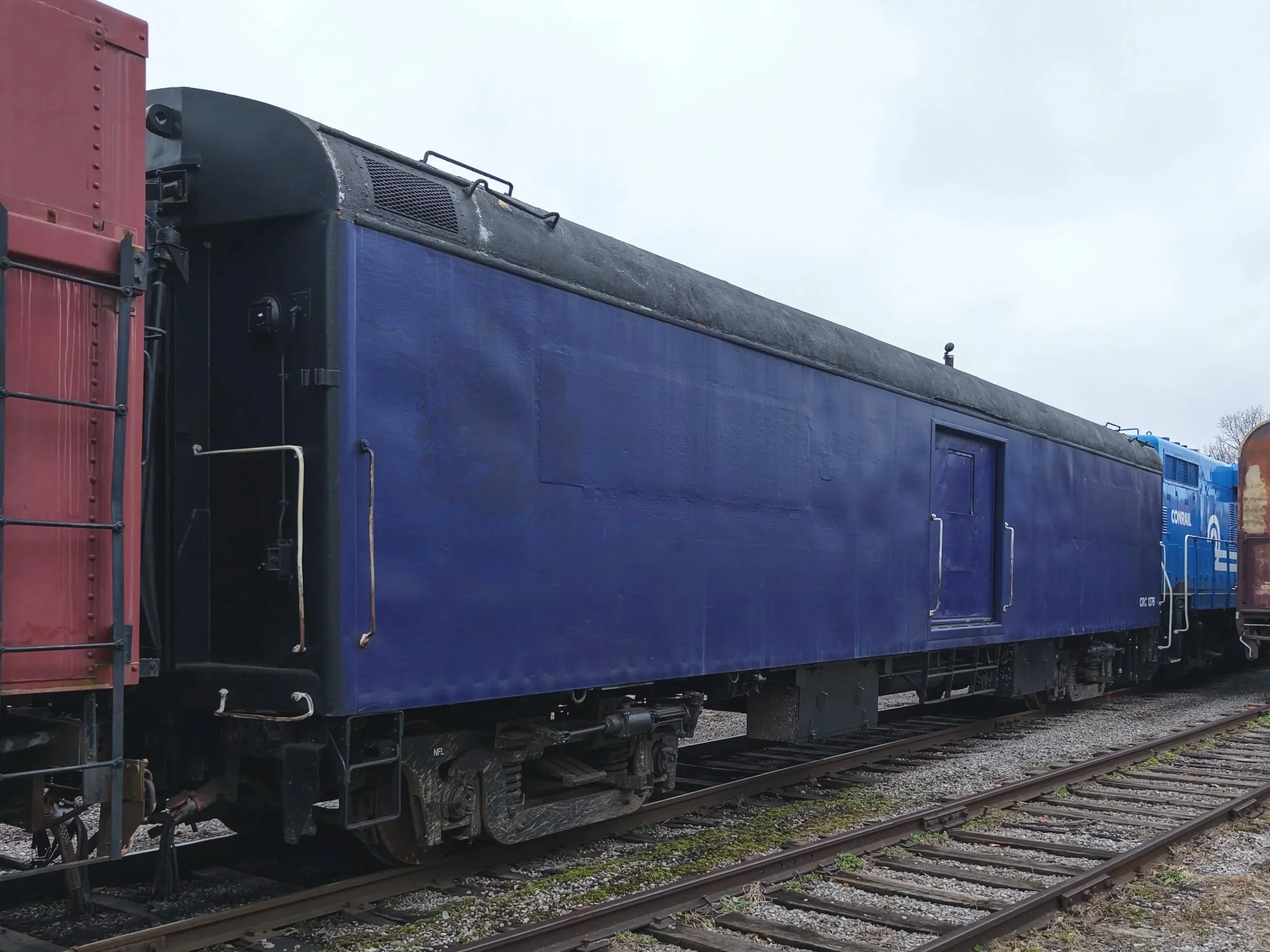
#1376 - Power Car
These 50-foot cars were built in 1953 by St. Louis Car Company for the Army as kitchen cars intended for the Old War, later sold to Amtrak for use as baggage cars. Cincinnati Railway Company purchased the 1376 from Amtrak. Cincinnati Scenic Railway later purchased the 1376 and will continue to use it as a power car, providing electricity through our train.
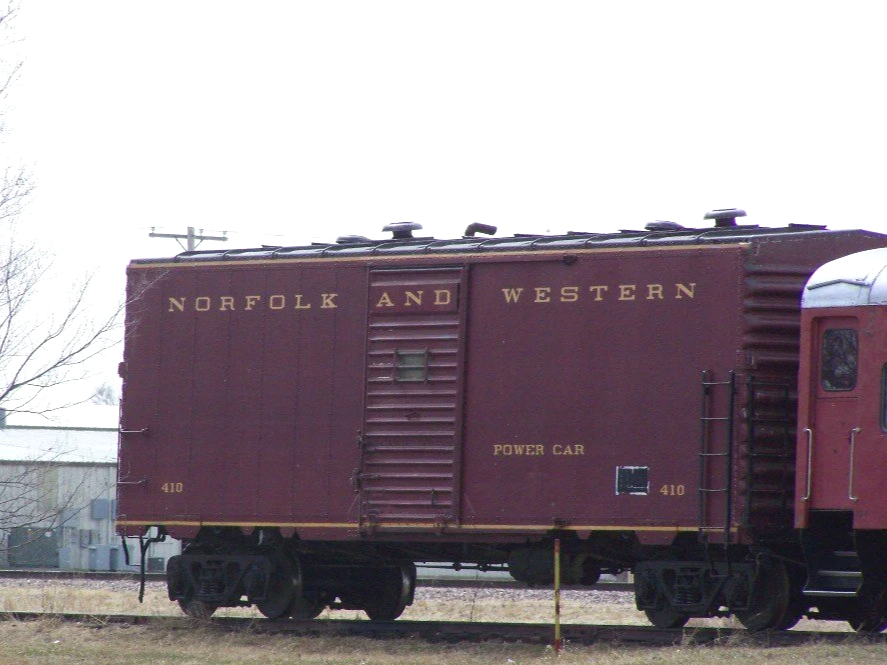
#8505- Power Car
The Nickel Plate Road in the late 1940’s was looking for head end cars that would match their newly ordered Pullman-Standard passenger cars.
During WWII, the country developed a huge aluminum capacity, primarily for the aircraft industry. The NKP Frankfort, IN shops in cooperation with the Alcoa Aluminum Company, built ten express boxcars completing the series in November and December 1947.
The car bodies (and much of the auxiliary equipment) were made completely of aluminum fashioned by Alcoa. The car bodies were not painted, but the aluminum bodies were clear coated. The under bodies and running gear were painted black. The cars were assigned numbers 8500 to 8509 and placed into service on Nickel Plate District passenger trains. These cars weighed 39,000 lbs. and were over 8000 lbs. lighter than standard boxcars due to the aluminum car bodies.
The cars were equipped with steam and signal lines and rode on A-3 Ride Control trucks. The cars survived the merger in 1964 but were not absorbed into the Amtrak fleet.
NKP 8505 is uniquely NKP and was often seen on passenger trains 5/6/7/8 between Chicago and Buffalo.
Cincinnati Scenic Railway purchased this car in 2025 and will restore it back to it’s original appearance and continue it’s use as a power car. More pictures and information can be found at: www.nkpohio.org
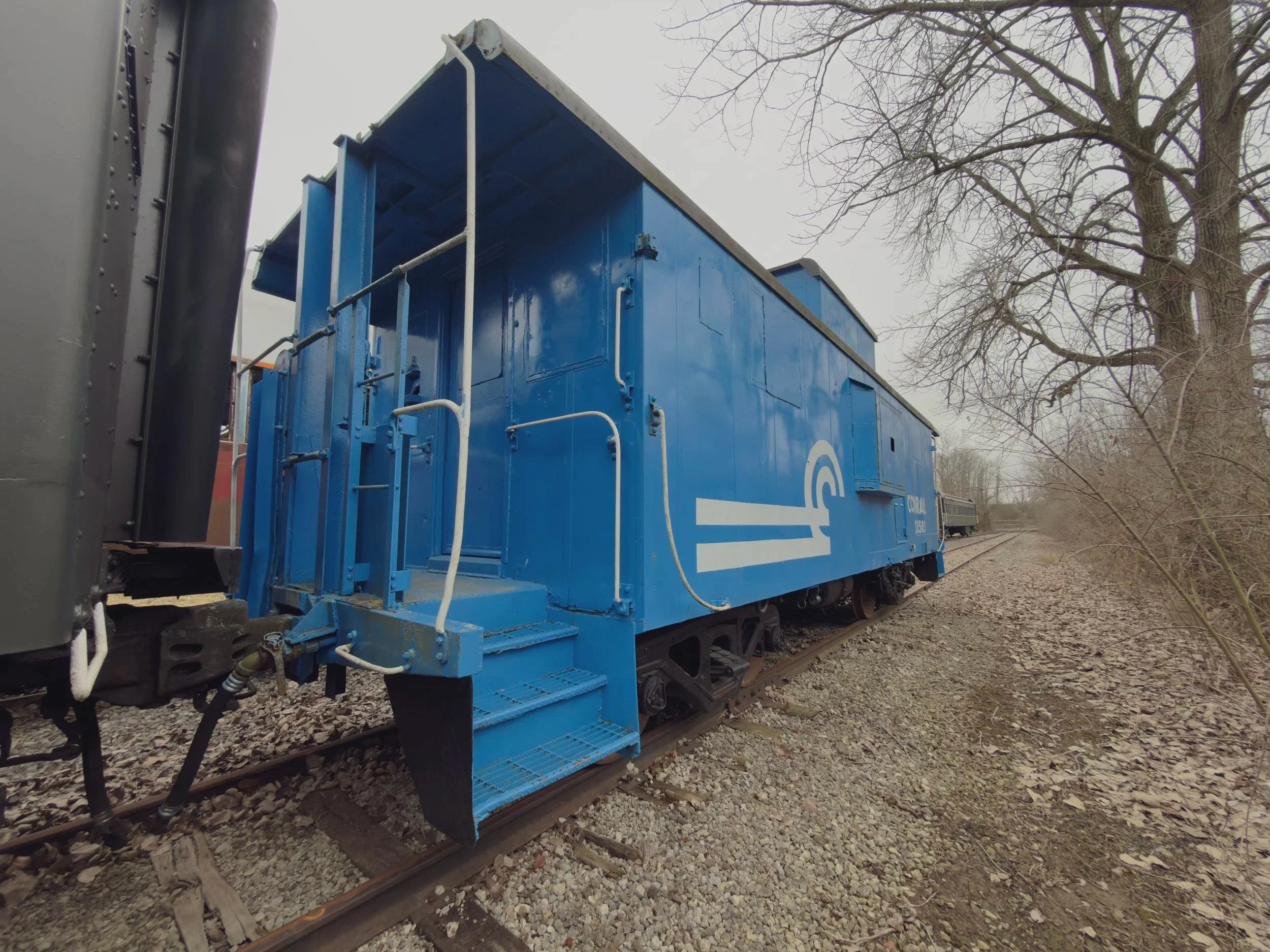
#23505 - Caboose
The 23505 is a steel, center-cupola cabin car originally built for the New Haven Railroad. They were inherited by Penn Central and later Conrail, with many serving into the 1970s. The 23505 was later used by the Indiana & Ohio railway before being purchased by Cincinnati Scenic Railway. It is currently awaiting interior restoration.
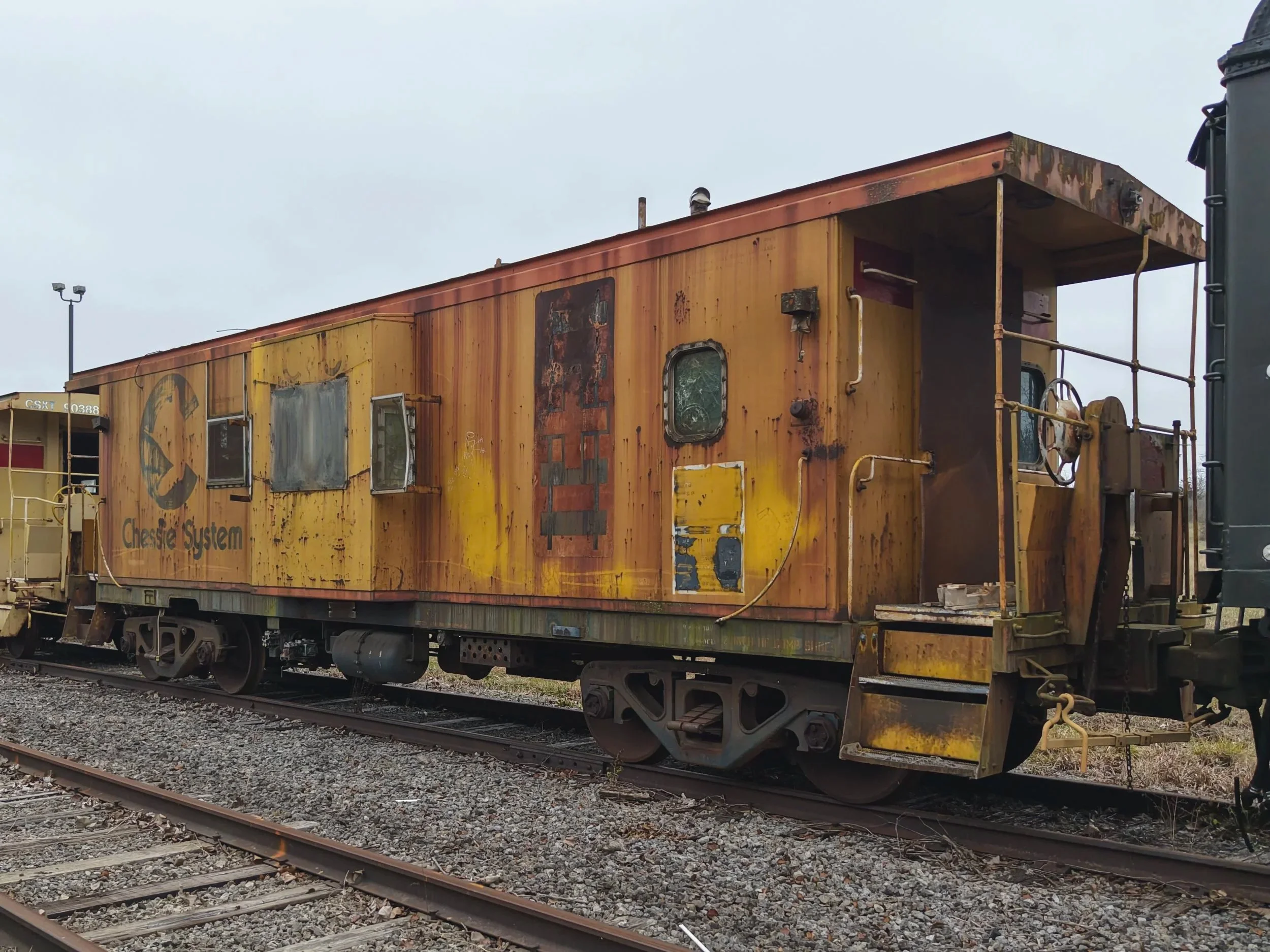
#904137 - Caboose
Chessie 904137 was built in 1980 by Fruit Growers Express in Alexandria Virginia. It was the 44th of 66 cars. It was part of 160 car order.
This was one of the last caboose series commercially built in the USA for an American railroad.
The entire class originally assigned to Michigan division in Grand Rapids. The 904137 was later donated by CSX to the Cincinnati Scenic Railway. It is currently awaiting restoration.
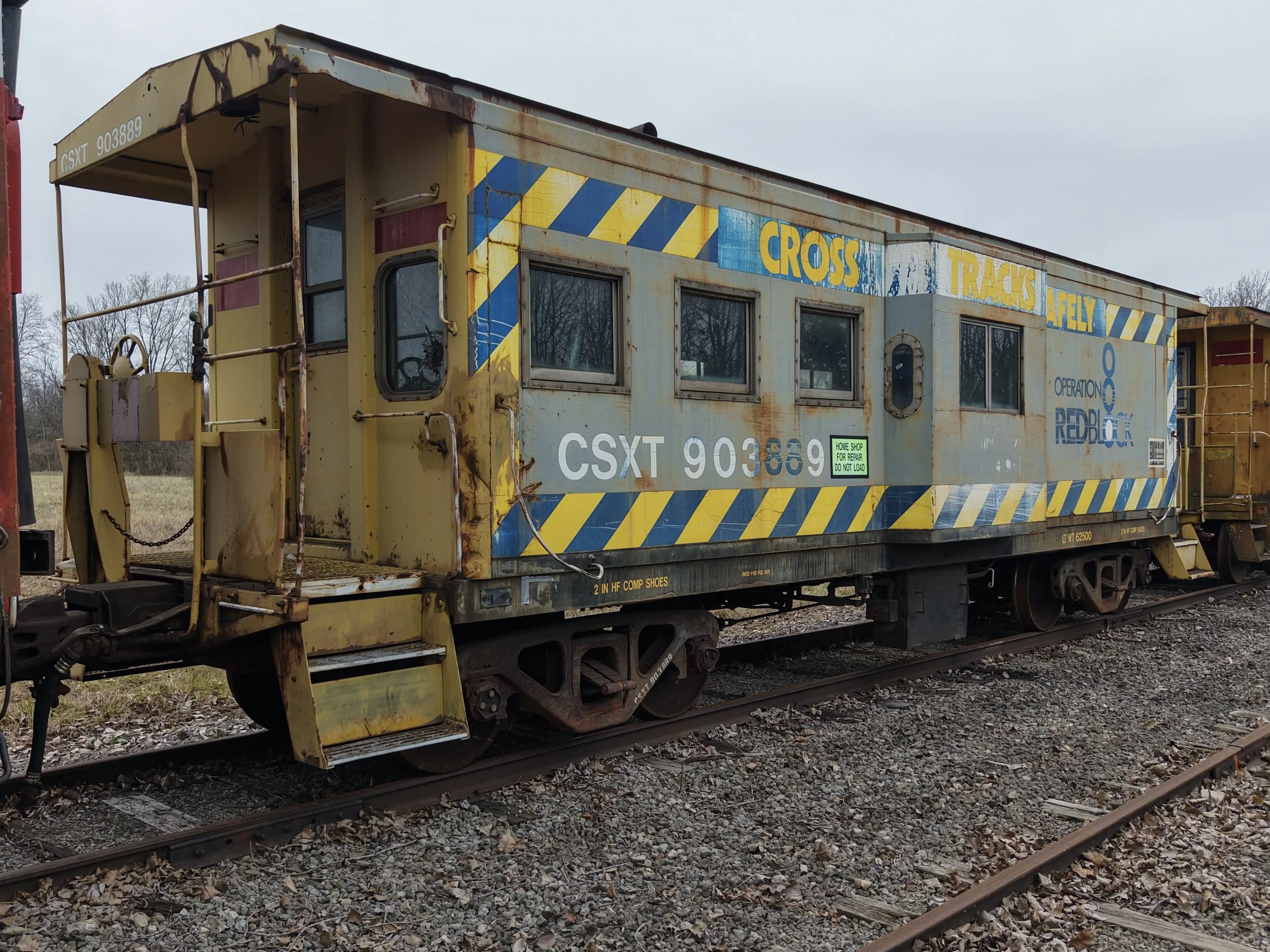
#903889 - Caboose
#903889 was built in 1975 by International Car, Kenton Ohio. It was the 62nd of 97 cars built.
It was retired from regular use in 1992 and converted to a CSX shoving platform.
Cincinnati Scenic Railway purchased the 903889 in 2026 and is awaiting future restoration.
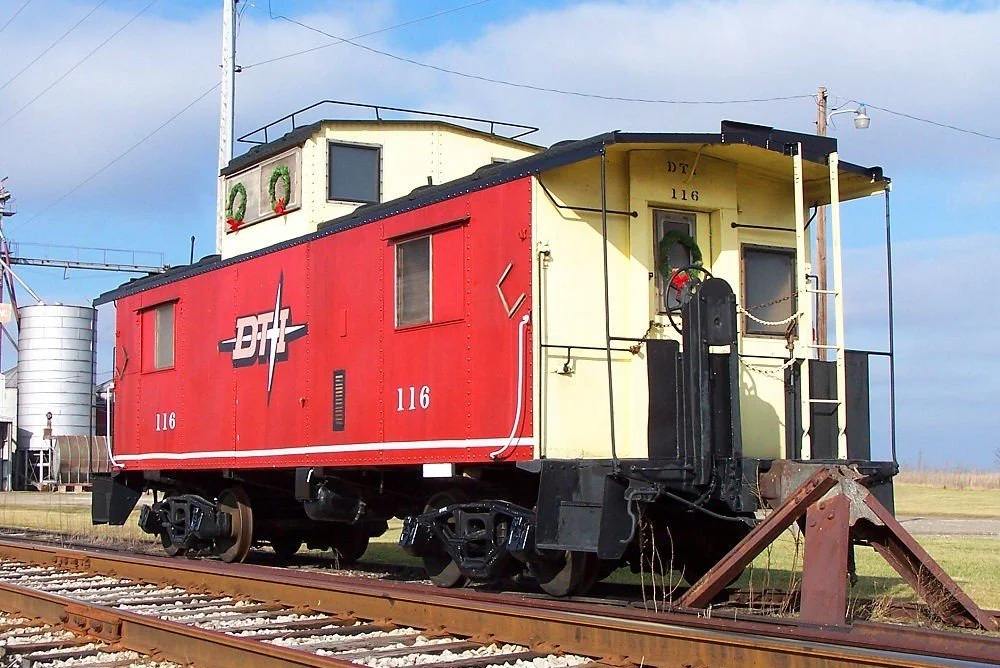
DT&I 116 - CABOOSE
The caboose was built for the Detroit, Toledo, & Ironton Railroad in 1949. The DT&I assigned it number 116. The caboose has been lovingly restored by its owner inside and out. Our caboose seating is a truly unique experience that literally puts you in the conductor’s seat. The elevated seats provide panoramic views of the scenery. Be sure to book in advance as seating in the caboose is limited to twelve and the caboose is only available on select departures.